
Financial Fair Play - Part I
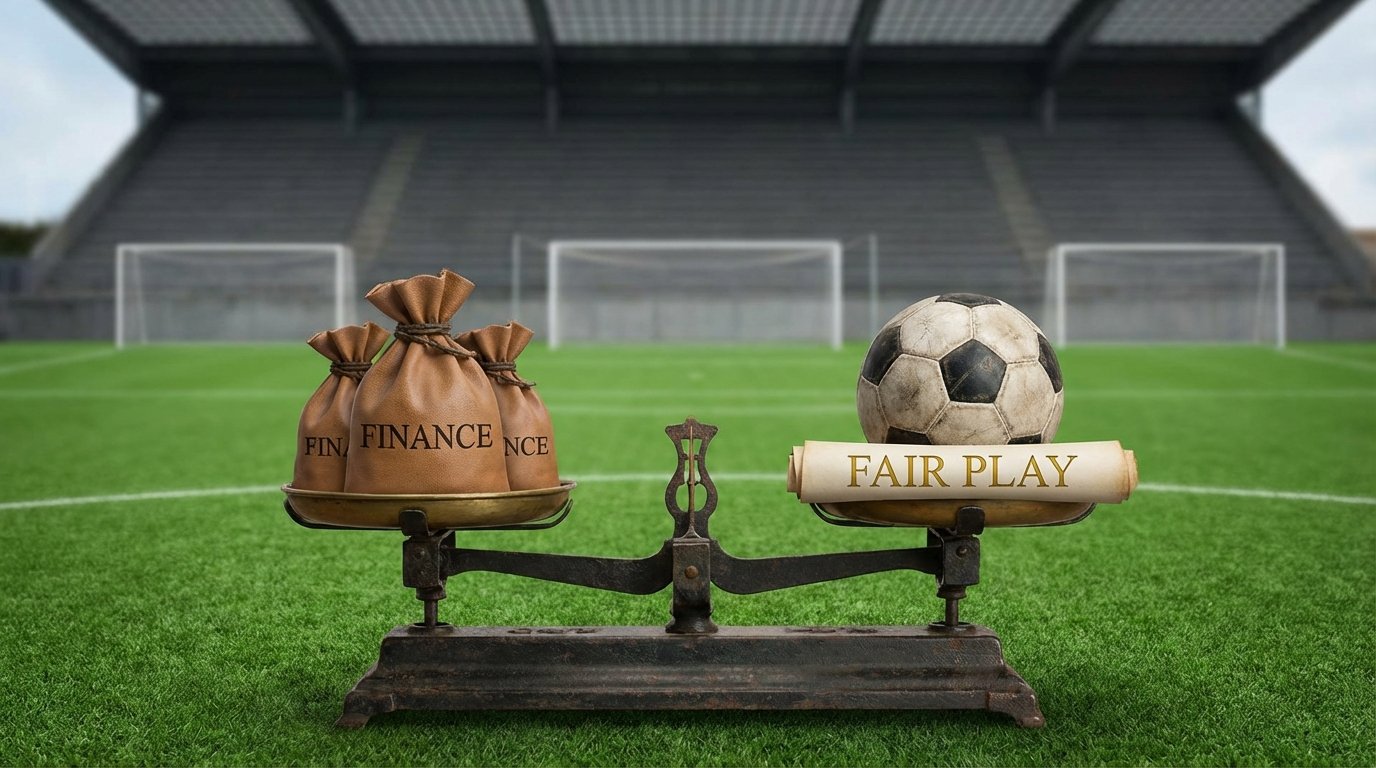
It has already been stated in this space that the importance of football for the country – marked by inequality – and its importance for a segment of the population – which sees football as the (sole) means of social advancement – transcends private interests. Football activity should, or rather, must be a matter of state, embodied in public policies that affirm it as a path to educational, social, and economic development.
Recent movements, which resulted, to cite a few examples, in the Home Team Law (Law 14.205/21), the SAF Law (Law 14.193/21), and the General Sports Law (Law 14.597/23), are not the result of coordinated and integrated actions, therefore stemming from a national vision. They were conceived and designed from diverse sources, for diverse reasons.
These characteristics simultaneously highlight the power of sport in Brazil, which survives despite the disinterest of the State – and its rulers – and the immense opportunity that is wasted, ultimately to the detriment of the community.
Governments on the left, center, or right, populist or pragmatic, popular or not, have had the opportunity to leave a transformational mark, but have lost themselves, when any real interest existed, in militancy and the preservation of interests.
Furthermore, the internal structure of football has also contributed significantly to a decline evidenced by the systemic crisis of Brazilian clubs, many of them drowning in debts stemming from financially irresponsible conduct, and by the irrelevance, on a global scale, of the championships organized and played in Brazil.
Where, in effect, is the Brazilian Championship projected, outside the country?
In which countries do foreign fans of Brazilian teams concentrate and multiply, to rival or compete with Spanish, French, English, Italian, or German teams?
The situation will not reverse until two contingencies, perhaps inseparable, are resolved: the first, the union of the teams around a single development project, based on a true league, with organizational responsibility for the main Brazilian championship; and the second, consisting of the recovery and preservation of the health of Brazilian teams.
Regarding the first contingency, we have already written, with some insistence, in this space, including from the perspective of the State's role in defining, at the legislative and regulatory level, incentives for the country to promote the most competitive league on the planet.
The focus of this series of articles will now be on the second contingency, whose solution necessarily involves the cultural introduction and use of what has become known as financial fair play.
The term was introduced in Brazil without translation and is used as practiced in its origin. It refers to a regulatory system designed to induce (or compel) the adoption of responsible practices regarding the management and allocation of resources. Its aim is to create instruments that prevent spending beyond the capacity of each club.
Or rather, within (and not beyond) a pre-defined standard, according to parameters that vary from country to country, or between different leagues. In any case, standards of responsibility are defined in order to achieve the sustainability of each member and the system as a whole.
Financial fair play, therefore, serves, in the words of journalist Rodrigo Capelo, to "improve the financial condition of football clubs and make the market as a whole more stable and solid". And to ensure that a club does not spend more than it can afford.
Europe, in general, serves as a reference on the subject. Actions promoted by UEFA – one of the confederations recognized by FIFA, formed by federations from the European continent – or by leagues, such as the Premier League, created and managed by the teams (generally business entities constituted in accordance with English law) that compete in the league itself, with the purpose of organizing the main local championship, stand out.
Although the regulatory purpose converges, the scope and instruments adopted vary according to the origin of the regulator.
Confederations have broader competence and scope than Federations, which act restrictively within their territories. In turn, leagues further reduce their scope, directing their rules to the limited system they operate, generally related only to the championship (or league) they organize – and, obviously, to the participating teams.
In either regulatory framework, financial fair play does not serve to reduce inequalities among those regulated, so small teams will not find ways to grow in size through its adoption; or to secure credit lines for their members.
Even so, it is noted that, from the amplified (confederative) to the limited (generally, league-specific) level, the rules intensify, conversely, in order to reinforce what is conventionally called the product.
Intensification serves to ensure that, within heterogeneous realities, certain homogenized behaviors are found, conferring credibility to the system and objectively encouraging revenue generation based on products and services.
South America is still in its infancy regarding this issue. CONMEBOL, the confederation that brings together the South American federations, promises commitment to establishing rules of this nature. However, the economic disparity and political characteristics of the region constitute complex challenges.
In Brazil, a league that could adopt paths like the Premier League has not yet emerged. Therefore, it fell to the CBF, in a historic move, to initiate the process.
The action through federations is not new. The aforementioned journalist Rodrigo Capelo reports on European experiences, especially the Dutch one from 2003, originating from its federation.
The novelty, therefore, lies in the very fact of the institution of financial fair play in Brazil, which will be discussed in the next texts of this series.