
When Development Meets Mumbai’s Salt-Pan Lands: A Legal Perspective
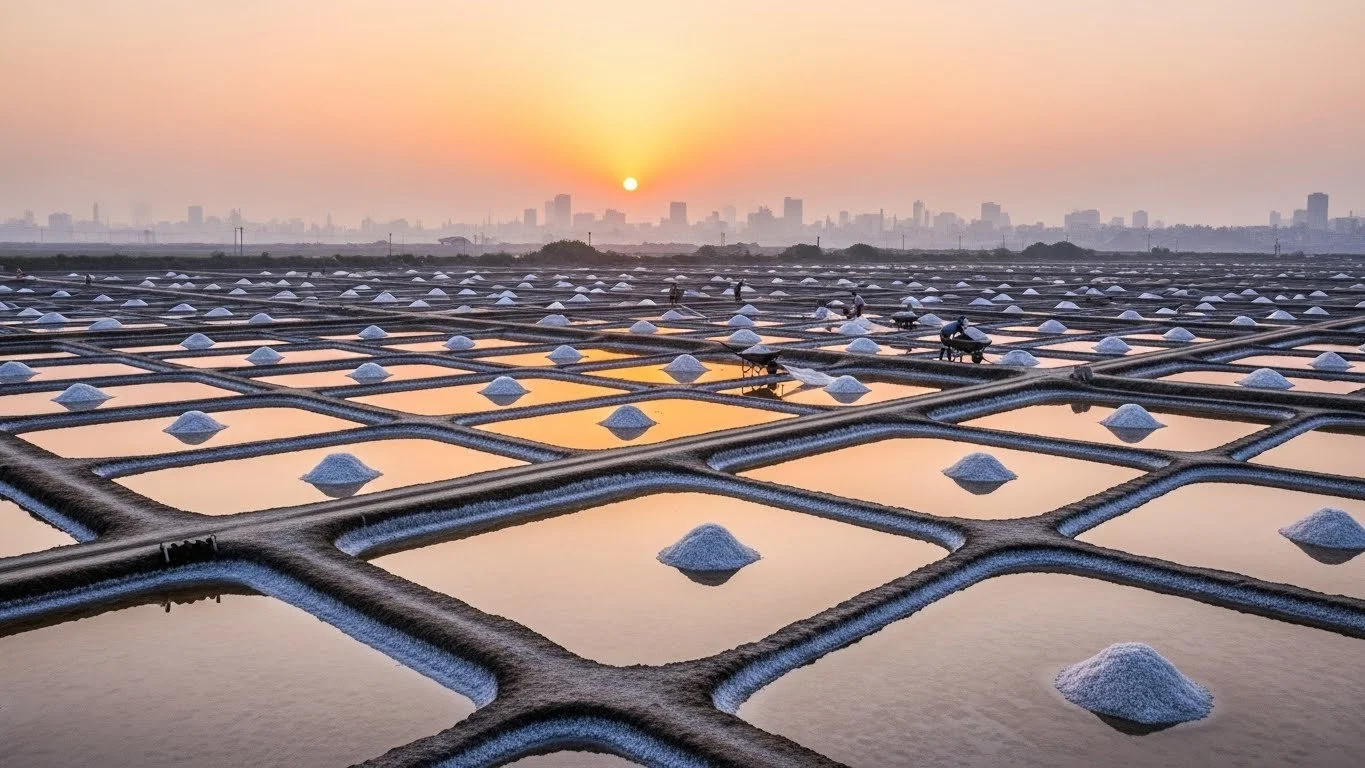
Mumbai’s salt pans are no longer just remnants of its salt making industry, they now stand at the centre of the city’s land use debate. With severe scarcity of buildable land and escalating property prices, these tracts are viewed as potential reserves for housing, slum rehabilitation, and infrastructure. The Maharashtra Government, under pressure to execute ambitious housing and rehabilitation initiatives including large scale projects such as the Dharavi Redevelopment Scheme, has repeatedly looked towards these lands as a possible solution1. Yet, their development is entangled in legal, environmental, and social complexities that make them far more than vacant plots awaiting construction.
Ownership and Transfer:
The starting point lies in ownership. Salt-pan lands are formally vested in the Union Government and managed through the office of the Salt Commissioner. Leasehold rights were historically granted to private salt manufacturers, giving rise to a dual ownership structure that often leads to jurisdictional conflicts between the Centre and the State. This tension between central control and state level planning has long shaped the narrative of how Mumbai can or cannot access these lands.
To address such conflicts, the Internal Policy Guidelines on Transfer of Salt Lands, 2024 now provide a mechanism for transfer, primarily for public purposes such as affordable housing or rehabilitation.2 Yet, in Mumbai and its suburban districts, Cabinet approval remains a mandatory safeguard before any transfer can take effect. This insistence on higher scrutiny reflects the delicate balance between public interest and private speculation in a city where every acre of land carries outsized stakes.
For developers, rights accrue only after a valid transfer, typically through a 99 year lease carrying strict restrictions. Any diversion of land use invites cancellation and reversion to the Government. For citizens, these transfers are more than bureaucratic transactions, they represent either the promise of housing and rehabilitation, or, if mishandled, the risk of being sidelined in favour of private profit. Against this backdrop, the legacy of leasehold arrangements further complicates matters.
Leasehold Disputes:
Even where ownership is clear, questions of possession remain fraught. Many of the leases granted decades ago for salt production have expired or remain pending renewal, yet lessees often continue to claim rights and occupation. The Government maintains that such rights lapse automatically upon expiry, while lessees assert continuity, leading to disputes over renewal, compensation, and reversion. These disagreements do not exist in a vacuum, they feed directly into the city’s development logjam.
For developers, unclear title makes investment risky and renders projects vulnerable to litigation. For the State, unresolved disputes delay the execution of large scale housing and rehabilitation schemes. And for citizens, the consequences are immediate, families promised resettlement remain in limbo while technical lease battles drag on in courts. Unsurprisingly, judicial precedents have underlined that unless such disputes are conclusively resolved, no redevelopment can lawfully proceed. But even when these hurdles are cleared, another challenge looms the environment itself.
Environmental Safeguards:
Even when ownership and leasehold questions are addressed, environmental restrictions present another formidable layer of complexity. Salt-pan lands lie in coastal and low lying zones, making them ecologically sensitive and subject to overlapping statutory regimes. The Coastal Regulation Zone (CRZ) Notification, 2011 (as amended in 2019) places strict limits on construction along coastal stretches3, while the Wetlands (Conservation and Management) Rules, 2017 prohibit reclamation and development in notified wetlands. Although the 2024 Guidelines exclude salt pans from the definition of wetlands for housing and rehabilitation purposes, CRZ restrictions remain firmly applicable.
For developers, this means navigating multiple clearances from the Ministry of Environment, Forest and Climate Change, the Maharashtra Coastal Zone Management Authority, and the municipal planning authorities under the Development Control and Promotion Regulations.
Obtaining these clearances not only delays projects but also risks cancellation and prolonged litigation.
For citizens, environmental safeguards represent both protection and delay. On one hand, they preserve the city’s fragile drainage systems and prevent unregulated construction that could worsen flooding and ecological degradation. On the other, they can slow or halt projects that promise much needed affordable housing and rehabilitation. This tension has made public participation through environmental hearings and Public Interest Litigations.
For instance, in Vaamika Island v. Union of India4, the Supreme Court reaffirmed the primacy of environmental law by holding that no construction could be permitted in ecologically sensitive areas, even if the land was privately owned, unless clearances under applicable environmental statutes were obtained. The Court emphasized that sustainable development must not be at the cost of environmental degradation, and where there is uncertainty, the precautionary principle must apply.
Permissions and Regulatory Approvals For Construction:
Perhaps the most tedious element in the utilisation of salt-pan lands for urban development is the labyrinth of approvals required from multiple regulatory bodies. Any construction proposal must first secure no objection certificates (NOCs) from the Salt Commissioner’s Office, since these lands fall under central ownership. Additionally, environmental clearances under the Environmental Impact Assessment (EIA) Notification are mandatory, requiring project specific studies on ecological impact, flood risks, and drainage patterns. CRZ clearance from the Ministry of Environment, Forest and Climate Change is essential, along with permissions under the Wetlands Rules where applicable. Local authorities such as the Municipal Corporation of Greater Mumbai (MCGM) must also grant building approvals, land use conversions, and development permissions in accordance with the Development Control and Promotion Regulations (DCPR). Furthermore, the Maharashtra Coastal Zone Management Authority (MCZMA) must evaluate and recommend projects before final approval by the central ministry. The overlapping jurisdiction of these bodies, coupled with the possibility of objections by citizens or NGOs at public hearing stages, makes the process highly time consuming and uncertain. This web of procedural obligations illustrates why, despite repeated announcements, actual construction on salt-pan lands has rarely materialised.
Judicial Oversight and Public Rights:
The judiciary has played a decisive role in shaping the legal landscape around salt-pan lands in Mumbai. In Sagar Kantilal Deore v. State of Maharashtra (2024), the Bombay High Court upheld the transfer of over 250 acres of salt-pan land for rehabilitation linked to the Dharavi Redevelopment Project. The Court accepted the policy position that such lands were excluded from the wetlands definition under the 2024 Guidelines, but emphasised that statutory environmental approvals must still be secured before construction could proceed.5
This reflects a balanced judicial approach. Courts recognise the public benefits of redevelopment, affordable housing, rehabilitation, and infrastructure but they remain firm that the right to a clean and safe environment under Article 21 of the Constitution cannot be compromised. Judicial oversight has therefore ensured that development advances, but only within the strict bounds of law, where environmental and public rights remain safeguarded.
Conclusion:
The future of Mumbai’s salt pans lies at the intersection of development and conservation. For the State, these lands are vital to deliver housing and rehabilitation at scale. For developers, they represent a rare real estate opportunity, though one bound by stringent legal and environmental obligations. For citizens, they are both a source of hope for secure housing and infrastructure and of concern, given the risks of flooding, ecological loss, and mismanagement.
As Mumbai seeks to balance these competing interests, the salt pans become more than just vacant land. They symbolise the city’s challenge of reconciling rapid urban growth with environmental stewardship and public welfare. Their development, if undertaken with transparency and accountability, could serve as a model for sustainable urban expansion but if mishandled, it risks deepening the very vulnerabilities the city seeks to resolve.
