
Financial Fair Play - Part II
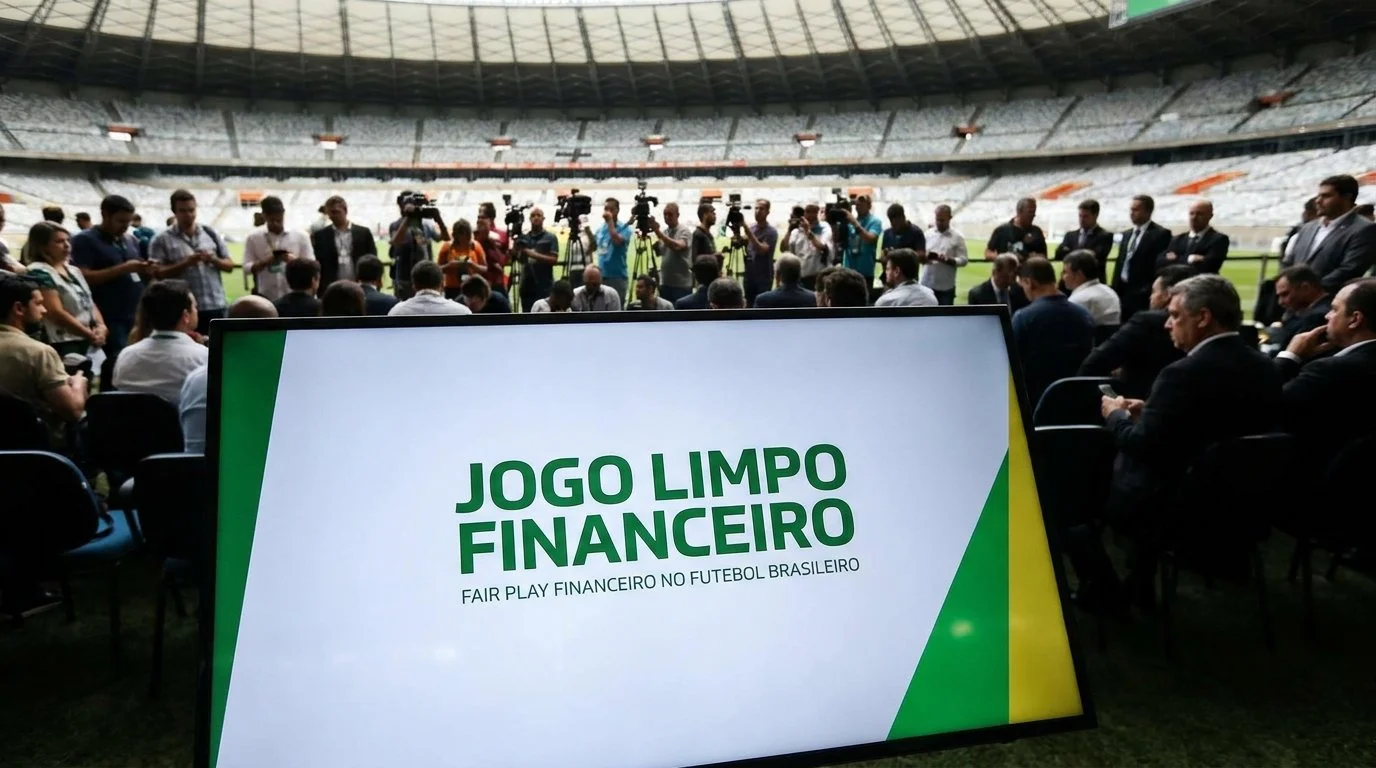
It was stated in the conclusion of Part I of this series that, in Brazil, a league of teams that could adopt self-regulatory paths like the Premier League has not yet emerged. Therefore, it fell to the CBF, in a historic move, to initiate the process.
This commendable move does not, however, preclude future self-regulation within the scope of a possible (or necessary and indispensable) Brazilian football league, so that, on different levels, confederative regulation, looking at the macro level of the sport's sustainability in the country, and the regulation of the league itself, the entity that, in theory, brings together and regulates the championship under its organization in a restricted sense, coexist. The diagram below illustrates the hypothetical system:
Since this diagram is still theoretical, this Part II only addresses the reality, consisting of the regulation promoted by the CBF.
This was no simple mission. In fact, it was a mission, because the formal act of introducing the Financial Fair Play System (SSF) regulations does not solve the problems of the crisis facing clubs and the football industry itself.
Perhaps, on the contrary, it is the starting point (and not the end point) for achieving the desired purpose – which, in the words of the CBF (Brazilian Football Confederation), is the construction of a sustainable future for Brazilian football.
The projection of the result, going forward, that is, into the future, does not occur by chance. Sustainability will not magically establish itself for everyone immediately.
Instead, a challenge emerges that unfolds on several fronts. Among all of them, the most challenging consists of understanding and, consequently, addressing the inequalities – economic, patrimonial, and sporting – that characterize the recipients of financial fair play rules; rules that must, by their very nature, be unified for everyone.
This is because, as Caio Cordeiro de Resende, author of the main and most robust work on financial fair play in Brazil, states when discussing the movement promoted by UEFA: "the system was not conceived, justified or presented by UEFA as a way to stimulate greater competitiveness among clubs, whether in national or international championships".
Herein lies the dilemma faced by any regulator, in Brazil or elsewhere. This dilemma, in some way, reveals an insurmountable contradiction (and almost unbearable, from a finalistic point of view) to sustainability, which guides any program: the introduction occurs at a specific historical moment, representing a "snapshot" of the history of each and every team, and does not take into account the historical "film," indicative of what each team represents or can represent as a regional or national, cultural or sporting expression.
Thus presented, the introductory moment can influence, perhaps forever, the balance of power in the competitive arena.
In other words, a club mistreated by its management, drowning in debt and lacking credibility or access to capital, upon being subjected to certain new (and necessary) standards of responsibility and efficiency, will face an extremely difficult path to adapt and regain the ability to play a leading role in the transfer market and player recruitment.
While a team that is healthy, generates revenue, profit, and cash, and has invested in structure and infrastructure, will already be well-positioned to sustain hegemonic relationships.
Imagine, then, if the system had been implemented in the first decade of this century, a period when São Paulo was still a benchmark (or *the* benchmark of Brazilian football), and Flamengo was writhing in debt and political conflicts.
The introduction of the system at that time would have benefited (or rewarded) the administrative successes of one club, and, at the same time, probably hindered the reorganization and restructuring of the other (which, after the election of a certain group, imposed a policy of austerity, a kind of self-serving fair play, which led it, years later, to the balance that allows it, in current times, to rival European clubs in terms of player transfers).
Unfortunately for São Paulo and other clubs that abused irresponsibility, lacked control techniques over club management powers, and were lenient with conflicts of interest and the use of club resources for personal gain, the SSF (São Paulo's financial system) arrived at a bad time. For the few clubs that anticipated the necessary steps, the system will rightfully reward responsibility.
In truth, there will never be a perfect time for everyone; the ideal (or best) time is when an authority, with legitimate powers, in any of the areas indicated in Part I, decides to act.
And, in acting, it lends itself to addressing issues such as investment parameters and limits, indebtedness, payment delays (including to other competing clubs in the same competition), values involving player transactions, squad cost parameters, club timeshare ownership and group favoritism, related-party deals, insolvency, among other equally important aspects.
The next texts in the series will be dedicated to the construction process established by the CBF and its content regarding Brazilian financial fair play.