
Fintech Companies Are Regulated. What About Mining Farms?
Over the past decade, financial regulation has evolved at an unprecedented pace. Fintech companies have transformed payments, credit, investments, and financial inclusion, forcing governments to create new rules on licensing, cybersecurity, consumer protection, and anti-money laundering.
However, while the law has focused its efforts on regulating those who manage money, another phenomenon has grown virtually outside the legal debate: cryptocurrency mining farms.
The paradox is clear. Fintech companies manage financial services; mining farms manage the technological infrastructure upon which a significant part of the digital economy is beginning to be built.
Two industries, two regulatory challenges
Fintech companies were conceived as new financial intermediaries. Therefore, their regulation revolves around clearly identifiable risks: user protection, financial system stability, transparency, cybersecurity, and regulatory compliance.
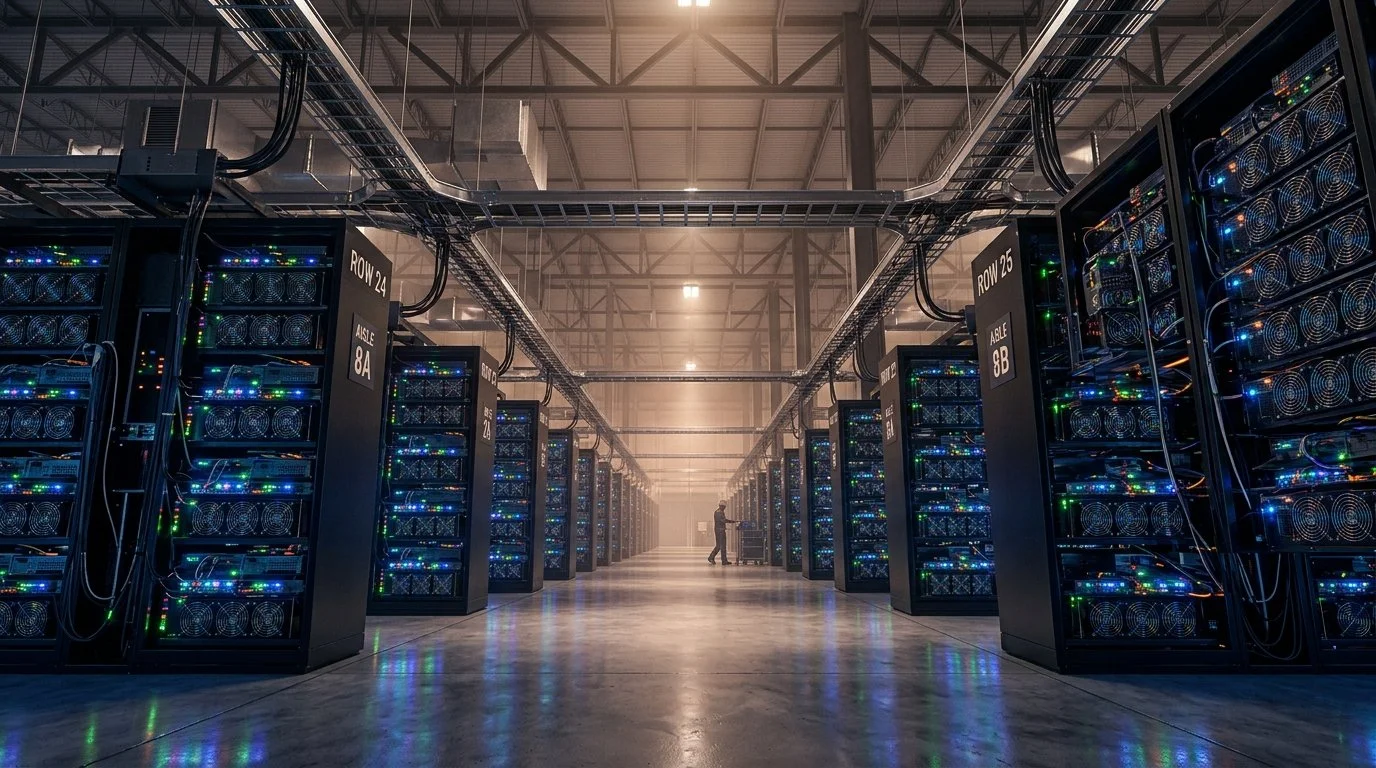
Mining farms operate according to a different logic. Their primary input is not money, but energy. Its operation depends on electrical infrastructure, connectivity, cooling systems, investment in data centers, and the continuous availability of computing power.
From this perspective, a mining farm is much more like a data center than a financial institution.
Comparative experience confirms this difference. China restricted mining when it concluded that it compromised its energy and economic objectives. The United States took advantage of this shift to attract investment through legal certainty and competitive energy. Canada and the Nordic countries used their energy advantages to consolidate themselves as technology hubs, while Paraguay began to transform its hydroelectric surpluses into an opportunity to attract intensive investments in computing power.
The debate is no longer focused exclusively on cryptocurrencies. Today it revolves around who will control the digital infrastructure of the future.
Energy, Infrastructure, and Development
High energy consumption is usually the main criticism leveled at mining. However, every strategic industry demands large amounts of energy. The difference lies in the efficiency with which it is used and the economic value it generates.
In many countries, mining farms take advantage of surplus electricity that would otherwise remain underutilized. Furthermore, their ability to temporarily reduce consumption during peak demand makes them, in certain electrical systems, a tool for grid stabilization.
The real discussion isn't about how much a mining farm consumes, but rather how to integrate this infrastructure into a modern energy policy.
Bolivia faces a strategic opportunity
Bolivia shouldn't limit this debate to the use of cryptocurrencies. Computing infrastructure will be essential for artificial intelligence, data centers, high-performance computing (HPC), cloud computing, and numerous digital industries.
If the country aspires to participate in this transformation, it will need to offer legal certainty, clear regulatory rules, energy planning, and incentives capable of attracting long-term technology investments.
Regulating only digital assets means observing the outcome. Regulating technological infrastructure means understanding where future economic value will be generated.
Conclusion
Fintech was the first major regulatory challenge of the digital economy. Mining farms represent the next.
The real discussion is no longer solely about controlling digital financial transactions. It's about deciding who will develop the technological infrastructure that will enable artificial intelligence, high-performance computing (HPC), cloud computing, and the digital economy of the coming decades.
States that understand this transformation will design policies capable of attracting investment, strengthening their competitiveness, and consolidating their technological sovereignty. Those that don't will, once again, arrive after the revolution has already happened.
