
Football, the Grinding Machine, and Risk Aversion in Brazil
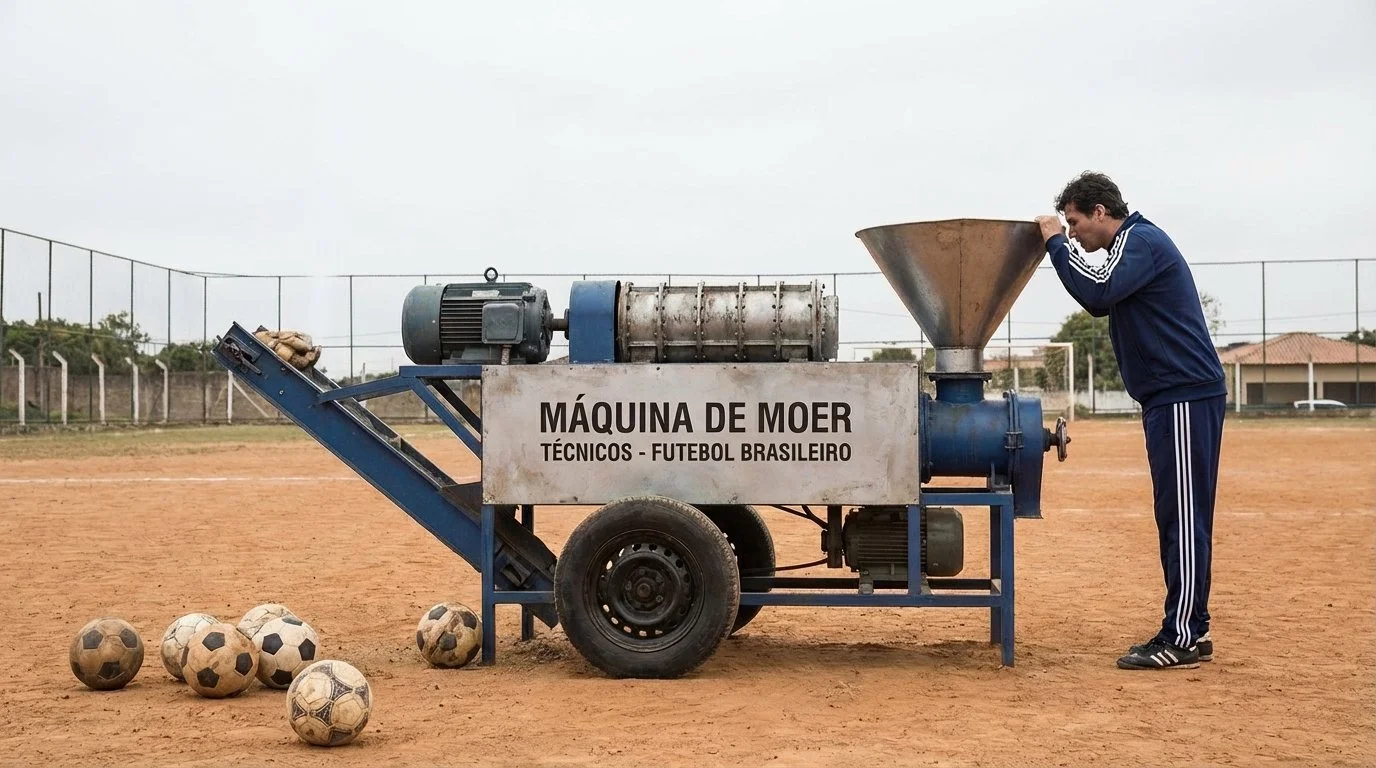
Brazilian journalist Paulo Vinícius Coelho (“PVC”) touched on a sensitive issue in his article published on UOL on March 16, 2026, titled “The Brazilian Championship’s coach-grinding machine destroys one per round.”
In the final paragraph, he states that “the problem is not the lack of competence of coaches born here nor the lack of adaptation of those who come from abroad. The problem is the illiteracy about football among managers and the press. What we call the ‘culture of Brazilian football’”.
The wound he touches on, seemingly confined to football or its culture, goes further, is deeper, and reveals itself, in fact, as a culture of Brazil, ingrained in society, that makes it almost irreparable – and self-destructive.
For many years, the country has been experiencing an institutional or governance crisis at all levels, public or private, which hinders progress, whether economic or social, as intended in the Flag.
Governing has become a guerrilla movement.
Almost nothing can be governed without guerrilla warfare. From apartment complexes to the presidency of the Republic, passing through football clubs, the dynamic is marked by tension, dispute, resistance, attack and rupture – and by dismissals, impeachments and resignations. And, in current times, by the proliferation of (mis)information; of any information, true or not.
Common purpose, which is not geared towards individual interest (which then becomes communal or associative, by imposition), is becoming rare.
In the Brazilian Championship, coaches are being fired, on average, one per round so far, according to research by this journalist, due to power plays by owners of SAFs (who have much to lose with wrong decisions) or club presidents (who become "owners" of associative assets and exercise power, very often, in a totalitarian way, without or with inefficient instruments of restraint, and who lose nothing economically from their mistakes). In some cases, it's due to a lack of culture, but in many others, it's due to other reasons.
The dismissals of coaches, in effect, are not only related to results, but also to external pressure, generally originating from interest groups or pressure groups, identifiable or not.
A fan base, in a generic perspective, is a collective, without legal personality, without leadership, without a purpose of domination, but highly influenceable (and easily inflamed). The press is also, eventually, susceptible.
Organized fan groups, besides being legally recognized, are internally organized into bodies that express positions, formed according to purposes defined by their leaders (or controllers).
Media outlets, on the other hand, when they adopt "flags," can overthrow presidents (including club presidents), install replacements, and promote other things.
This whole situation exposes the leader, whether educated or uneducated, from the perspective of PVC's text, who then becomes less guided by strategic planning and more by emergencies (and, eventually, by fear). Even if, to the outside world, they affirm and reaffirm their independence. Because it is an elected position, it is subject to vicissitudes and, ultimately, they lose their position, which will be filled by another leader, keeping the wheel turning.
This mechanism does not work in the business environment (and in sports investments). Planning, even if based on random variables, follows understandable and justifiable patterns. The model excludes irrationality, violence, or smear campaigns.
Thus, the relationship between fans and their teams in Brazil, in general, paradoxically contributes to systemic instability, both on and off the field.
It's undeniable that few human gatherings are more exhilarating than the crowd at a football match; however, when that energy is converted into aggression, violence, frustration, appropriation, or conflicts of interest, it subverts the logic of the process.
In football, this subversion discourages capital providers, in any form, because they cannot predict, with any certainty, the reactions within the system (including the negative ones).
Or, worse: it leads these providers to assume that, in any situation, there will be a loss of control, triggered when results are (inevitably) below expectations, and they flee from these environments.
This Brazilian reality, defined by journalist PVC as a cultural deficit (or illiteracy), helps explain the lack of interest from significant international investors in national sport.
Other factors, it's true, act as a deterrent, such as the absence of a unified league and the legal insecurity experienced by controllers or guarantors of SAFs (expropriated without legal basis precisely in the name of the fans); however, these are compounded by the exposure caused by fan groups and the intrusions, often violent, encouraged (or not repressed) by society.
Who cares, after all, about the consequences of this cultural element? Rather, who is willing to promote the necessary debate, provoked by the journalist?