
The Fans as Both a Source of Wealth and a Contingency for a Football Team
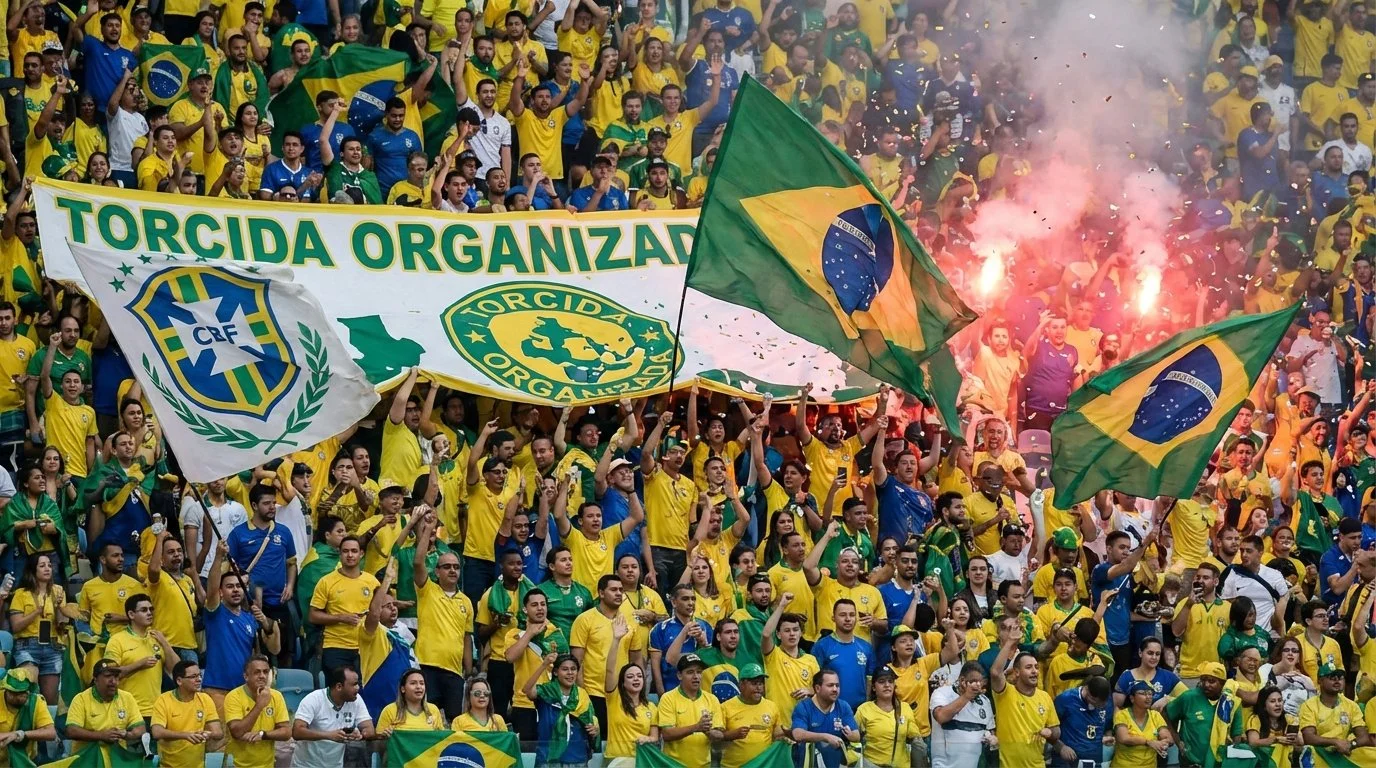
The interest that certain topics provoke is unpredictable and surprising. Sometimes something is published that, for the writer, has great relevance, but the reaction is timid; other times one writes about a topic that one imagines shouldn't generate much interest, but the result is reversed.
This is what happened in relation to the text published last week in this space, in messages and calls from people who work in the sector, or not, and all more or less in the same direction.
The most impactful was from – and here, in the context of the article, it's impossible to talk about him without superlatives – the greatest leader, in my opinion, in the history of Brazilian sport: Mario Celso Petraglia. He stated that "Brazilians don't love their favorite club, they are passionate about victory."
He's right. And I dare to go further.
It's not just a passionate relationship with victory, but a projection or discharge, as the case may be, of personal idealizations or frustrations that become collectivized – despite their distinct origins or formations – and turn irrational and unjustifiable.
These characteristics operate in a dual sense, both positive and negative.
The fan base, which can be described as an intangible asset and, as such, generates experiences and revenue for various teams, can also, on the other hand, become a contingency (or liability). Because, in this situation, the fan base inhibits the evolutionary process or transformational changes that depend on external agents, who are driven away by irrationality transformed into threat and violence.
It was with these arguments that a certain very well-established and successful executive, active in the financial market, pointed out that, until recently, he believed that Brazil, after the Home Team Law and the SAF Law – as is constantly stated in this space – would build the most vibrant football environment on the planet.
But, according to him, he had already lost this belief, not only because of the individualism of each club and the inability to unite and unify around a common (league) project; also because of the legal insecurity caused by unfounded interference in the projects of football corporations and in agreements freely entered into by clubs; and, above all, because of the unhealthy relationship that the fans maintain with their teams.
Illnesses translated into impatience, threats, aggression, violence, protests in other people's workplaces, among other occurrences.
For these reasons, according to that executive, national or international agents who intended to make structural investments, linked to their business and family histories – in many cases without concern for quick financial returns, but rather for building assets and legacy – have not been interested, until now, and will have difficulty in the future, looking at football in Brazil, due to the deleterious cases that occur in almost all clubs, including the most victorious in recent times, such as Palmeiras.
This is a pessimistic and alarmist view, it's true, but it reinforces the relevance of the debate regarding the problem raised by journalist PVC in his article published on UOL on March 16, 2026, concerning the supposed culture of Brazilian football, which inextricably involves the act of supporting a team.
This so-called culture, which benefits the conduct of football officials and certain niches or fan groups, such as members of various organized fan groups, serves to cover up a very unpleasant reality.
And it also protects people who cause (in)calculable damage to the teams they contradictorily support and to the entire fan community.
A true fan community, one that does not economically benefit from the team; and that does not hold positions in pressure groups. But which is easily influenced and, even involuntarily, contributes, in chorus, to irresponsible acts that ultimately affect their beloved team.
In this environment, those who cause harm to teams are irresponsible, in the legal sense. They are not held accountable for their actions, they do not compensate the clubs, and they do not indemnify bona fide fans. For these reasons, they become, or generate, contingencies.
The example is not difficult to provide.
Abel Ferreira, the Palmeiras coach, has remained in his position since 2020. During the same period, rivals São Paulo, Santos, and Corinthians had 93, 214, and 175 coaching changes, respectively. Did they all become incompetent along the way? Did their work truly reach its limit before the end of their contracts? Or did some leave due to pressure for results (and an impatient passion for victory)? And who bears the burden of the rupture?
We cannot forget that Abel Ferreira was the victim of criticism and disrespect, both on the field and in the dead of night, in the form of verbal abuse and vandalism. Had the board succumbed to the attack, as many do, he would have left his position long ago. And the club, possibly, would not have benefited from the calm that led to the results it has obtained – and will continue to obtain.
And who would be held responsible for the acts and the damage caused? To move beyond this hypothesis, who is responsible for the excesses and abuses committed and the damages suffered by other clubs that, together, have had 47 coaching changes while Palmeiras has only had one?