
Santa Cruz Produces. But Does the System Keep Pace With Its Growth?
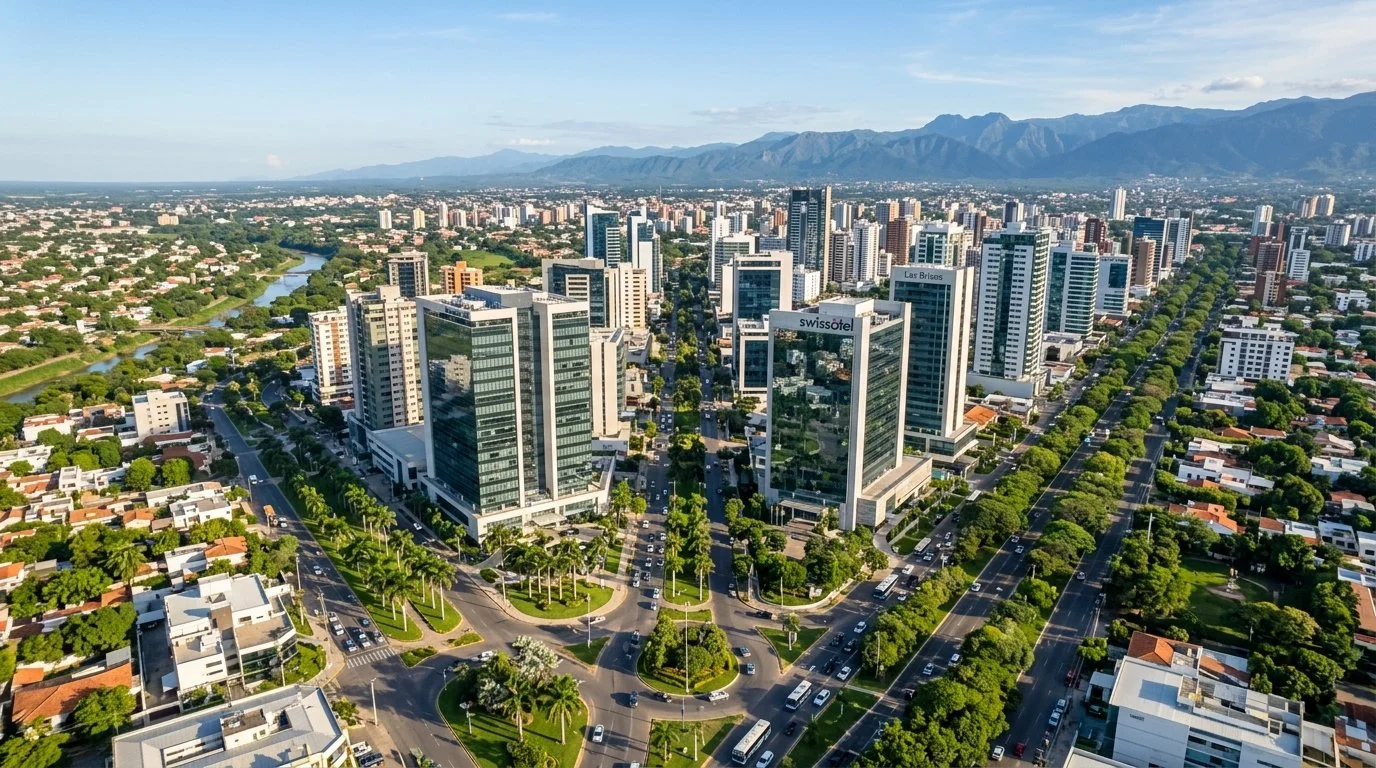
The other day I came across a reflection on the need for Santa Cruz to strengthen its own logistical access to the Atlantic via the eastern corridor, Paraguay, and the waterway.
I read it with interest because, beyond the specific proposal, it raises a deeper discussion: How does a region that attracts people, generates employment, and faces blockades and limitations beyond its control sustain its growth?
For decades, Santa Cruz has demonstrated an extraordinary capacity to attract investment, expand economic activity, and create opportunities. But every logistical disruption brings to light an uncomfortable reality: production is not enough without a reliable and competitive logistical access route.
When a route is blocked, it's not just a truck that stops. Economic activity is interrupted, costs increase, and the ability to compete deteriorates.
However, while thinking about logistics, another thought emerged.
Santa Cruz doesn't just export products. It also absorbs population growth.
Various analyses of urban growth and metropolitan expansion estimate that the Santa Cruz metropolitan area adds approximately 17,000 to 18,000 people monthly due to population growth, internal migration, and the formation of new households. This trend appears repeatedly in studies and projections prepared with reference to the IBCE (Bolivian Institute of Foreign Trade), the ICE (Costa Rican Institute of Statistics), CADECOCRUZ (Central Association of Santa Cruz), and the recent growth of the metropolitan area.
Beyond the exact number, the phenomenon reflects an undeniable reality: Santa Cruz continues to concentrate economic activity and attract population.
And here a paradox emerges.
Many people live, work, and conduct their economic activity in Santa Cruz, but when census processes are conducted, they maintain their registration in their place of origin. Beyond the personal reasons that may exist, this ends up generating a tension that is difficult to ignore: growth and the demand for services remain where people live and work, while resources do not always keep pace with this reality.
Something similar occurs with vehicle registration. Many people who migrate and decide to reside permanently in Santa Cruz keep their vehicles registered in other departments and continue to pay taxes there, even though they use the streets and infrastructure of their hometown daily. The regulations provide mechanisms for updating and registering vehicles, but their enforcement and application remain limited.
This is not about questioning anyone's right to maintain ties with their city of origin.
The question is different:
How do we ensure that the areas where people live, work, and use infrastructure also have the conditions to sustain growth?
National integration cannot mean permanent dependency or an incentive system that ultimately penalizes those who create jobs and bear the costs of urban growth and expansion.
This compels us to have a serious discussion about modern fiscal coordination, planning based on actual population, and greater financial capacity to support development.
National taxes must continue to fund the State, of course. But it also seems reasonable to demand that regions absorbing demographic pressure have sufficient tools to manage it.
The dilemma isn't about choosing between Santa Cruz identity and Bolivian identity.
The real challenge is changing the rules of the game so that growing up, working, and welcoming others don't end up being a disadvantage.
